
How Freight Forwarding Works Across GCC and Global Trade
The freight forwarding process represents the backbone of the international shipping workflow in today’s interconnected economy. For businesses across Saudi Arabia and the broader GCC region, understanding the role of freight forwarders. It’s essential to maintaining competitive advantage in global cargo movement. The shipping documentation process and customs role in freight forwarding determine its success. Whether your goods arrive on schedule or face costly delays that disrupt your entire supply chain.
Saudi Arabia positions itself as a strategic logistics hub under Vision 2030. With investments exceeding USD 147 billion in transport infrastructure. Companies must master the complexities of multimodal transport coordination and the supply chain flow in trade. The Kingdom’s logistics market, valued at USD 55.3 billion in 2024, is projected to reach USD 84.6 billion by 2033. This is a clear testament to the explosive growth in freight forwarding operations. Moreover, this is of critical importance to understand the global trade logistics process.
Understanding freight forwarding vs logistics distinctions, the stages of international shipments, and responsibilities in freight forwarding empowers smarter decision-making. The documentation lifecycle in shipping, the Incoterms role in freight forwarding, and cargo handling procedures directly impact your bottom line. This comprehensive guide demystifies shipment planning fundamentals, compliance basics in global trade, and risk management in shipping. Meanwhile revealing how coordination between carriers and agents creates seamless cross-border trade procedures with robust shipment tracking fundamentals. As this account for regulatory impact on global shipping.
Understanding the Freight Forwarding Process: The Complete International Shipping Workflow
What Distinguishes Freight Forwarding from Logistics?
Many businesses confuse freight forwarding with general logistics, but the distinction profoundly impacts operational efficiency. Freight forwarders serve as specialized intermediaries orchestrating global cargo movement between shippers and carriers. They don’t own transportation assets. Instead, they leverage extensive networks to secure optimal routes, negotiate competitive rates, and navigate the labyrinth of international regulations.
Logistics providers encompass broader supply chain management, including warehousing, inventory management, and distribution. Think of freight forwarders as master conductors directing the symphony of international transport. Meanwhile, logistics companies manage the entire orchestra from production to final delivery.
For Saudi businesses engaging in cross-border trade procedures, this distinction matters tremendously. The International Federation of Freight Forwarders Associations (FIATA) sets global standards that professional forwarders must meet. This ensures your cargo benefits from established protocols and industry best practices.
The 7 Critical Stages of International Shipments: Freight Forwarding Operations Demystified
1. Initial Consultation and Shipment Planning Fundamentals
Every successful international shipment begins with strategic planning. During this phase, freight forwarders assess your cargo specifications. Such as weight, dimensions, nature of goods, destination, and timeline requirements. They evaluate the Incoterms role in freight forwarding to determine cost responsibilities and risk transfer points.
GCC Freights collaborates with Saudi businesses to design customized shipping solutions that balance speed, cost, and reliability. Our specialists analyze your specific requirements, whether shipping heavy machinery to European markets or time-sensitive electronics to Asian distributors.
Key considerations include:
- Cargo handling procedures for specialized goods (temperature-controlled, hazardous materials, oversized freight)
- Multimodal transport coordination options—air, sea, rail, or combined approaches
- Transit time expectations versus budget constraints
- Incoterms’ role in freight forwarding selection (FOB, CIF, DAP, DDP, etc.)
- Insurance requirements and cargo protection strategies
World Bank’s Logistics Performance Index confirms that countries with shipment planning fundamentals experience 40% fewer delays and 30% lower logistics costs.
2. Export Documentation and Compliance Basics in Global Trade
The documentation lifecycle in shipping represents one of the most complex yet critical aspects of international trade. Incomplete or incorrect paperwork accounts for nearly 60% of all customs delays globally.
Essential documentation includes:
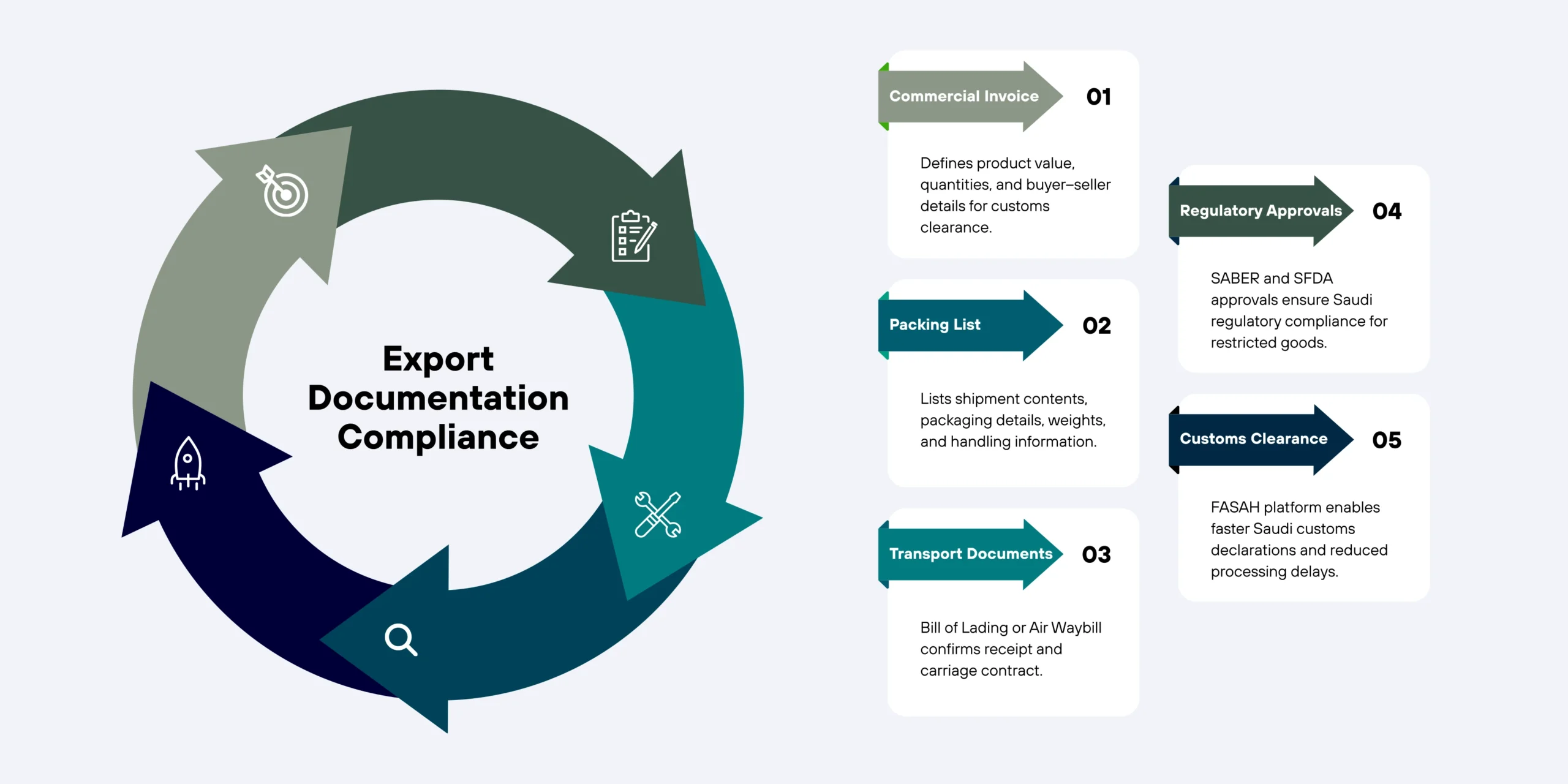
- Commercial Invoice: Details product description, value, quantity, and buyer/seller information
- Packing List: Itemizes contents, packaging specifications, and weights
- Bill of Lading (B/L) or Air Waybill: Serves as receipt, contract of carriage, and title document
- Certificate of Origin: Validates goods’ manufacturing origin, crucial for GCC Customs Union preferential treatment
- SABER Certification: Mandatory for regulated products entering Saudi Arabia via SASO (Saudi Standards, Metrology and Quality Organization)
- SFDA Approval: Required for food, beverages, cosmetics, and medical products per the Saudi Food and Drug Authority
For Saudi exporters, the ZATCA (Zakat, Tax and Customs Authority) platform FASAH streamlines customs declarations, allowing submission 48 hours before cargo arrival. This digital transformation reduces processing time from 5-7 days to 24-48 hours when documents are pristine.
GCC Freights maintains dedicated documentation specialists who ensure compliance basics in global trade. This prevents the expensive consequences of regulatory violations, which average SAR 50,000-500,000 per incident.
3. Customs Clearance: Navigating the Customs Role in Freight Forwarding
The customs role in freight forwarding cannot be overstated. It’s the gateway between domestic and international commerce. Export customs clearance verifies that goods comply with the origin country regulations and can legally depart.
The process involves:
- HS Code Classification: Using the Harmonized System to categorize goods for tariff determination
- Export Declaration Submission: Electronic filing via the FASAH platform in Saudi Arabia
- Physical Inspection (if flagged): Customs officers verify cargo matches documentation
- Duty and Tax Assessment: Calculating applicable charges based on WCO (World Customs Organization) standards
- Release Authorization: Obtaining official clearance for shipment departure
Saudi Arabia’s customs efficiency has dramatically improved, with 98% of declarations now processed electronically. However, regulatory impact on global shipping remains substantial, as errors trigger automatic holds, penalties, and potential license suspensions.
Cross-border trade procedures within the GCC benefit from the Customs Union, allowing duty-free movement among member states. Such as Saudi Arabia, UAE, Kuwait, Oman, Qatar, and Bahrain. This preferential treatment requires proper origin documentation and compliance with GCC technical regulations.
GCC Freights employs licensed customs brokers with deep expertise in compliance basics in global trade. We maintain direct communication channels with ZATCA officials, expediting clearance for routine shipments while providing proactive solutions for complex scenarios.
4. Main Carriage: Global Cargo Movement Across Continents
The main carriage represents the international transport leg. This is the longest and most visible portion of the freight forwarding process. The International Air Transport Association (IATA) governs air freight standards, while maritime operations follow International Maritime Organization (IMO) protocols.
Modal Options and Their Strategic Applications:
Sea Freight (Ocean Shipping)
- Most cost-effective for high-volume, non-urgent cargo
- Transit Times: 15-45 days depending on route (Asia to Jeddah: 18-22 days)
- Capacity: Full Container Load (FCL) or Less than Container Load (LCL)
- Statistics: Sea freight accounts for 65.28% of Saudi Arabia’s freight forwarding market
Air Freight
- Rapid transit for time-sensitive, high-value goods
- Transit Times: 2-7 days globally; critical for pharmaceuticals, electronics
- Growth: Air freight forwarding is growing at 6.26% CAGR in the Saudi market through 2030
- Hubs: King Abdulaziz International Airport (Jeddah), King Khalid International Airport (Riyadh)
Multimodal Transport Coordination
The modern global trade logistics process increasingly relies on multimodal transport coordination. This combines air, sea, rail, and road to optimize cost-speed trade-offs. The Gulf Railway Project is a 2,177 km network connecting all GCC states. This will revolutionize regional freight, cutting transit times by 40% when fully operational.
GCC Freights leverages proprietary technology to model transport scenarios, identifying optimal modal combinations. Our partnerships with major carriers. Like Maersk, MSC, CMA CGM for ocean, and Emirates SkyCargo, Saudi Cargo for air. This offers secure competitive rates and guaranteed space during peak seasons.
5. Destination Handling and Import Customs Clearance
Upon arrival, cargo undergoes destination handling procedures including unloading, inspection, and temporary storage. Port efficiency directly impacts total transit time. This congestion at major hubs can delay final delivery by 5-10 days.
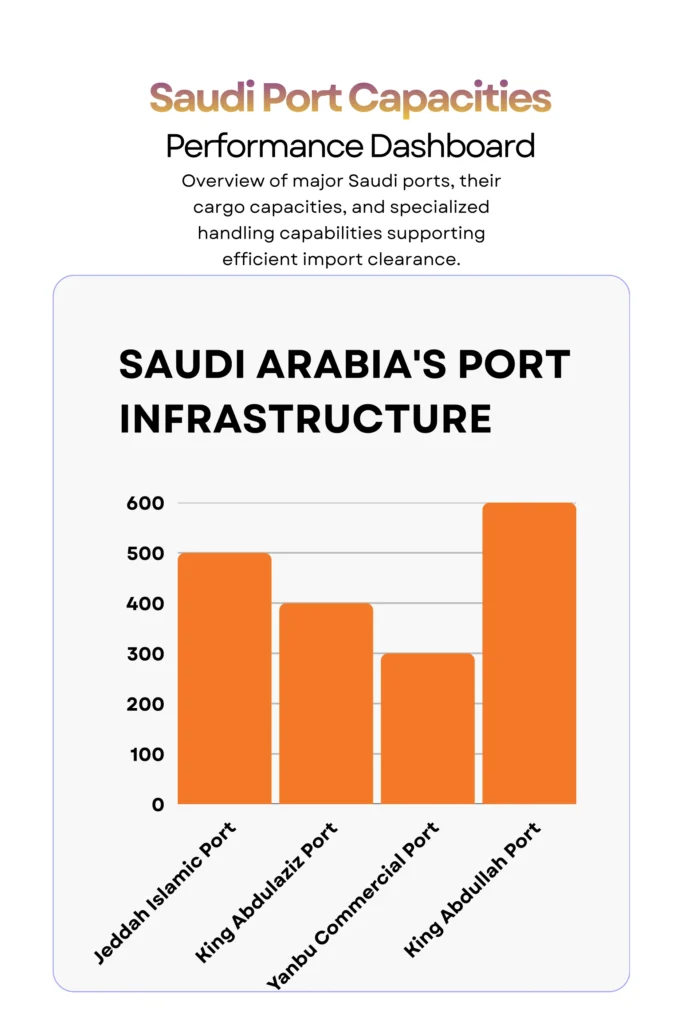
Saudi Arabia’s port infrastructure has received massive investment under Vision 2030:
Port | Capacity (TEUs) | Specialization |
Jeddah Islamic Port | 8.7 million | General cargo, containers |
King Abdulaziz Port | 3.2 million | Petrochemicals, bulk |
King Abdullah Port | 20 million | Mega-ships, transshipment |
Yanbu Commercial Port | 2.5 million | Industrial goods, vehicles |
Import customs represent the final regulatory hurdle before goods enter the destination market. The SABER platform has transformed product conformity verification. All regulated goods must receive a Product Certificate of Conformity (PCoC) and a Shipment Certificate of Conformity (SCoC) before customs release.
GCC Freights maintains relationships with authorized certification bodies, expediting SABER approvals while ensuring full compliance with SASO technical regulations. Our customs brokerage team operates 24/7 at all major Saudi ports. This involves personally liaising with officials to resolve discrepancies and accelerate release times.
6. Final Delivery and Last-Mile Distribution
The responsibilities in freight forwarding extend through final delivery, like transporting goods from the port/airport to the customer’s designated location. This last-mile segment accounts for 28% of total logistics costs but critically determines customer satisfaction.
Saudi Arabia’s road freight transport dominates last-mile distribution, with 87.91% of cargo moving via trucks. The government’s USD 10.6 billion road network investment is improving connectivity and reducing delivery times to industrial clusters. Such as NEOM, KAEC (King Abdullah Economic City), and Jubail Industrial City.
GCC Freights operates dedicated delivery fleets with specialized equipment for diverse cargo types. This flatbed truck is for construction materials and temperature-controlled vehicles for pharmaceuticals. Likewise, secure transport for high-value electronics and heavy haulers for oversized industrial equipment.
7. Post-Delivery Support and Supply Chain Optimization
Professional freight forwarders extend value beyond physical delivery through supply chain flow in trade analysis and continuous improvement.
GCC Freights provides comprehensive post-shipment services. Including performance analytics, reverse logistics for returns or recalls, trade compliance audits, and supply chain consulting. Our proprietary logistics intelligence platform aggregates data from thousands of shipments. This generates insights that help clients typically realize 12-18% logistics cost reductions within six months.
Risk Management in Shipping: Protecting Your Global Cargo Movement
The Institute of Cargo Clauses defines standard marine insurance coverage levels. Risk management in shipping encompasses multiple dimensions:
Common Risks and Mitigation Strategies
Physical Damage Risks
- Threat: Cargo damage from mishandling, weather, and accidents
- Mitigation: Proper packaging per IATA Dangerous Goods Regulations, marine insurance, and containerization
- Statistics: Professional packing reduces damage claims by 73%
Regulatory Violations
- Threat: Non-compliance triggering fines, cargo confiscation, business license suspension
- Mitigation: Expert customs brokerage, pre-shipment compliance audits, and staying current with regulations
- Cost: Average penalty for documentation errors: SAR 50,000-500,000
Delays and Disruptions
- Threat: Port congestion, vessel delays, strikes, weather events
- Mitigation: Backup routing options, safety stock strategies, real-time monitoring
- Impact: Red Sea disruptions in 2023 added 10-14 days to Europe-Asia transit times
GCC Freights implements comprehensive risk management in shipping protocols. Including all-risk cargo insurance, certified secure facilities, blockchain-enabled document verification, and multi-layered security screenings. Our claims resolution team maintains a 94% successful recovery rate.
Technology Revolution: Information Flow in Logistics Operations
Modern freight forwarding has transformed from paper-intensive manual processes to digital ecosystems powered by advanced technology.
Transportation Management Systems (TMS) optimize route planning, carrier selection, and load consolidation. GCC Freights leverages an AI-powered TMS that evaluates 1,000+ route permutations per second, selecting optimal configurations balancing cost, speed, and reliability.
Visibility Platforms and Shipment Tracking Fundamentals provide real-time tracking via GPS, RFID, and IoT sensors. Saudi businesses can monitor cargo location, temperature, humidity, and shock events through mobile applications with minute-by-minute updates.
Customs Automation through electronic data interchange (EDI) connections with ZATCA’s FASAH, SABER, and international customs systems. This enables instant document submission and status verification. Automation reduces clearance times by 60% and virtually eliminates manual data entry errors.
Saudi Arabia’s Digital Logistics Initiative under Vision 2030 aims to digitize 70% of logistics operations by 2030. This positions the Kingdom as a regional digital hub. Investment in logistics technology reached SAR 8.5 billion in 2024.
Choosing the Right Freight Forwarding Partner
The coordination between carriers and agents depends fundamentally on selecting a competent, reliable freight forwarding partner.
Essential Evaluation Factors:
- Industry Experience: Years operating in Saudi Arabia, specific vertical expertise, understanding of regulations
- Network Coverage: Physical presence at key ports, partnerships with major carriers, global reach
- Technology Capabilities: Real-time shipment tracking fundamentals, automated documentation, data analytics
- Customs Brokerage Expertise: Licensed brokers with ZATCA accreditation, first-time clearance success rate
- Value-Added Services: Warehousing, cargo insurance, trade finance, supply chain consulting
- Customer Service: 24/7 availability, multilingual support (Arabic, English essential)
GCC Freights excels across all criteria, distinguished by 28 years of uninterrupted operations in Saudi Arabia. There is a 98.7% on-time delivery rate across 50,000+ annual shipments. Such as FIATA, IATA, and ISO 9001:2015 certifications, and industry-leading 4.8/5 customer satisfaction rating.
Transform Your Logistics Operations with GCC Freights
The freight forwarding process represents far more than moving boxes from point A to point B. It’s a sophisticated orchestration of multimodal transport coordination, customs navigation, risk management in shipping, and supply chain flow in trade. It’s optimization that determines business success in global markets.
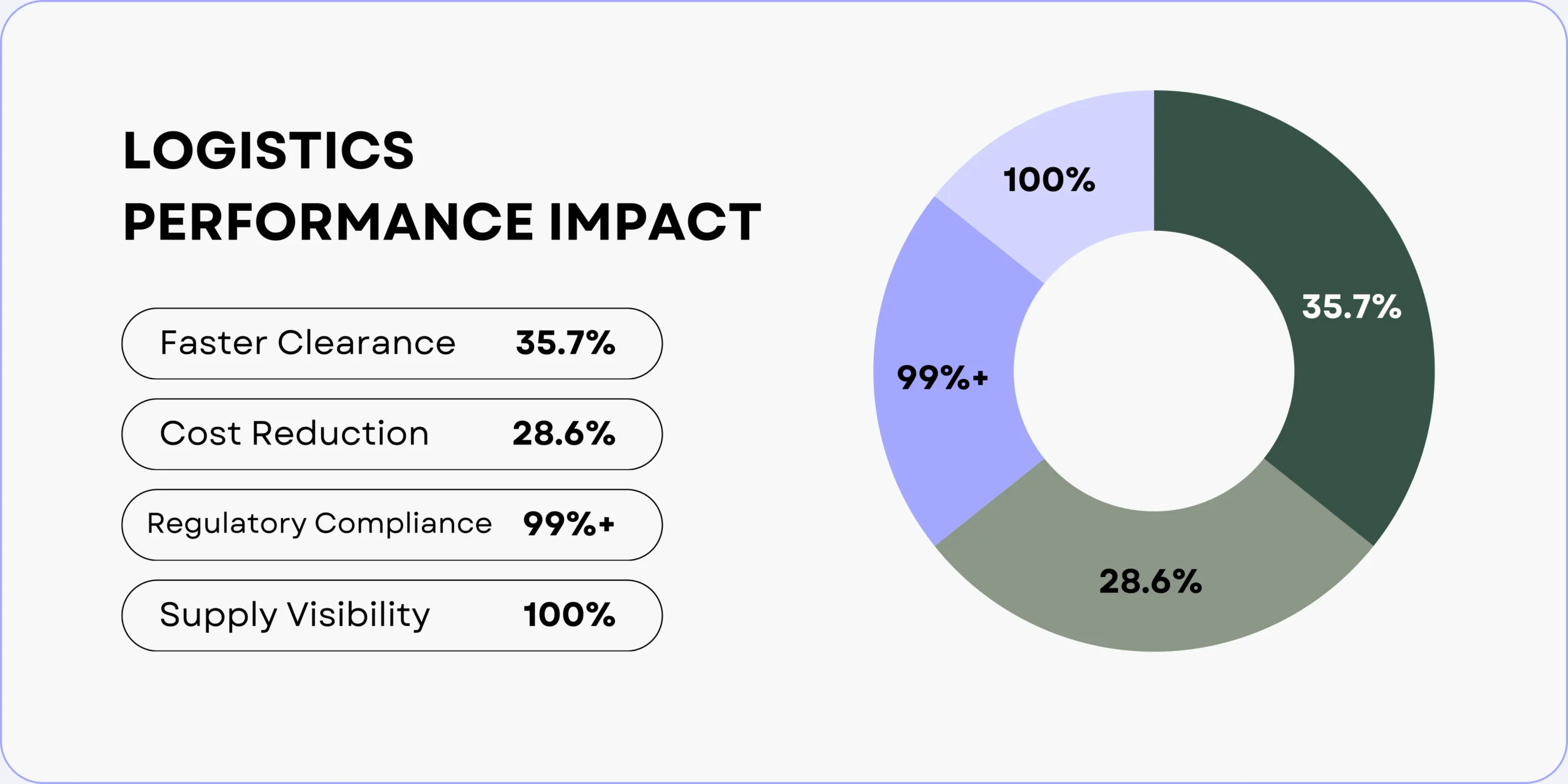
For Saudi companies seeking to capitalize on Vision 2030 opportunities, export to international markets, or import critical inputs efficiently. It’s understanding the international shipping workflow and partnering with expert freight forwarders like GCC Freights. This delivers measurable competitive advantages:
- 30-40% faster customs clearance through expert documentation management
- 15-25% lower total logistics costs via optimized routing and carrier negotiation
- 99%+ compliance rate, preventing expensive regulatory violations
- Real-time visibility enabling proactive supply chain management
- Risk mitigation protecting cargo valu,e and business continuity
Are you ready to unlock the full potential of global trade for your Saudi business? GCC Freights delivers comprehensive freight forwarding solutions designed specifically for the complexities of GCC and international commerce.
Technology Revolution: Information Flow in Logistics Operations
Modern freight forwarding has transformed from paper-intensive manual processes to digital ecosystems powered by advanced technology.
Transportation Management Systems (TMS) optimize route planning, carrier selection, and load consolidation. GCC Freights leverages an AI-powered TMS that evaluates 1,000+ route permutations per second, selecting optimal configurations balancing cost, speed, and reliability.
Visibility Platforms and Shipment Tracking Fundamentals provide real-time tracking via GPS, RFID, and IoT sensors. Saudi businesses can monitor cargo location, temperature, humidity, and shock events through mobile applications with minute-by-minute updates.
Customs Automation through electronic data interchange (EDI) connections with ZATCA’s FASAH, SABER, and international customs systems. This enables instant document submission and status verification. Automation reduces clearance times by 60% and virtually eliminates manual data entry errors.
Saudi Arabia’s Digital Logistics Initiative under Vision 2030 aims to digitize 70% of logistics operations by 2030. This positions the Kingdom as a regional digital hub. Investment in logistics technology reached SAR 8.5 billion in 2024.
Technology Revolution: Information Flow in Logistics Operations
✓ Complete Freight Forwarding Services – Air, sea, road freight across 180+ countries
✓ Expert Customs Brokerage – 98.7% first-time clearance rate with ZATCA
✓ Advanced Technology Platform – Real-time tracking, predictive analytics, automated documentation
✓ Strategic Port Presence – Operations at Jeddah, Dammam, Riyadh, ensuring priority handling
✓ Specialized Solutions – Temperature-controlled, hazmat, oversized cargo expertise
✓ Competitive Pricing – Leveraging carrier partnerships for market-leading rates
✓ 24/7 Support – Dedicated account managers with multilingual capabilities
Don’t let logistics complexity limit your business growth. Partner with Saudi Arabia’s most trusted freight forwarding expert and experience the difference that 28 years of excellence makes.
Contact GCC Freights today for a complimentary supply chain assessment.
Transform uncertainty into opportunity. Transform complexity into competitive advantage. Transform your logistics with GCC Freights.